Treating the ulcer to support healing
At the clinic, we care for venous ulcers with the aim of helping the wound heal and limiting recurrence. The doctor and nurses adapt care and follow-up to your situation. Healing depends on factors including circulation, the wound’s condition and your overall health.
Supporting healing with foam injections or laser
When superficial venous reflux contributes to an ulcer, ultrasound-guided foam injections or endovenous laser can treat the affected veins and help the ulcer heal. Foam is injected into the vein being treated; laser closes that vein using a fine fibre.
The choice depends on a duplex ultrasound assessment and your circumstances. These treatments work alongside dressings, prescribed compression, and medical and nursing follow-up. Healing varies from person to person.
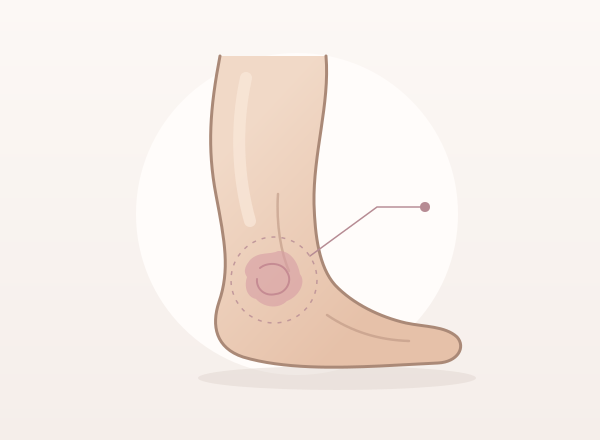
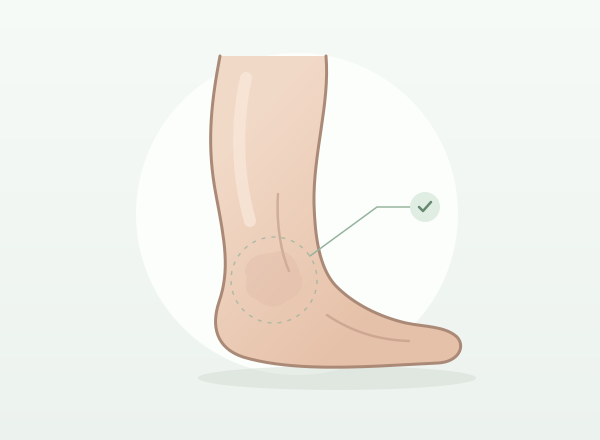
Before / after: illustrating healing
Schematic drawings of a possible outcome, not patient results. Healing and skin appearance vary from person to person.
Understanding the wound
A venous ulcer is a persistent wound related to excessive pressure in the leg veins. It often develops near the ankle. Swelling, itching, brown discolouration or hardened skin may occur around it. Not every leg wound is caused by a vein problem.
Source : NHS — Venous leg ulcer
Assessment before compression
An examination looks for the cause and checks both vein and artery circulation. A Doppler test and comparison of ankle and arm blood pressures may be needed. Strong compression should not be started without assessment: it can be unsafe when arteries do not supply enough blood.
Source : NHS — Diagnosis
Suitable dressings and compression
Care includes cleaning the wound, choosing a dressing for its condition and, when appropriate, applying compression bandages or stockings. Compression helps blood return up the leg and reduces swelling. Trained professionals should apply and adjust it. Antibiotics are for diagnosed infections; they do not replace wound care.
Source : NHS — Treatment
The doctor’s and nurses’ roles
The doctor assesses the cause, circulation problems and treatment options. Nurses help with local care, dressings and monitoring healing according to the care plan. Pain, surrounding skin and the progress of the wound are reviewed so care can be adjusted.
Healing and preventing recurrence
Healing may take weeks to months; no deadline can be guaranteed. Prevention remains important after the wound closes: prescribed compression, appropriate activity, skin protection and follow-up.
Source : NHS — Prevention
When to seek prompt help
A persistent wound needs examination. Increasing pain, spreading redness, unusual discharge, fever or feeling unwell require prompt medical advice. Do not wait for a routine appointment if your leg is getting worse.
General information checked on October 25, 2026. Wound care and compression are tailored after professional assessment.
Care tailored to your wound
Contact the clinic to arrange an assessment and discuss an appropriate care plan.